

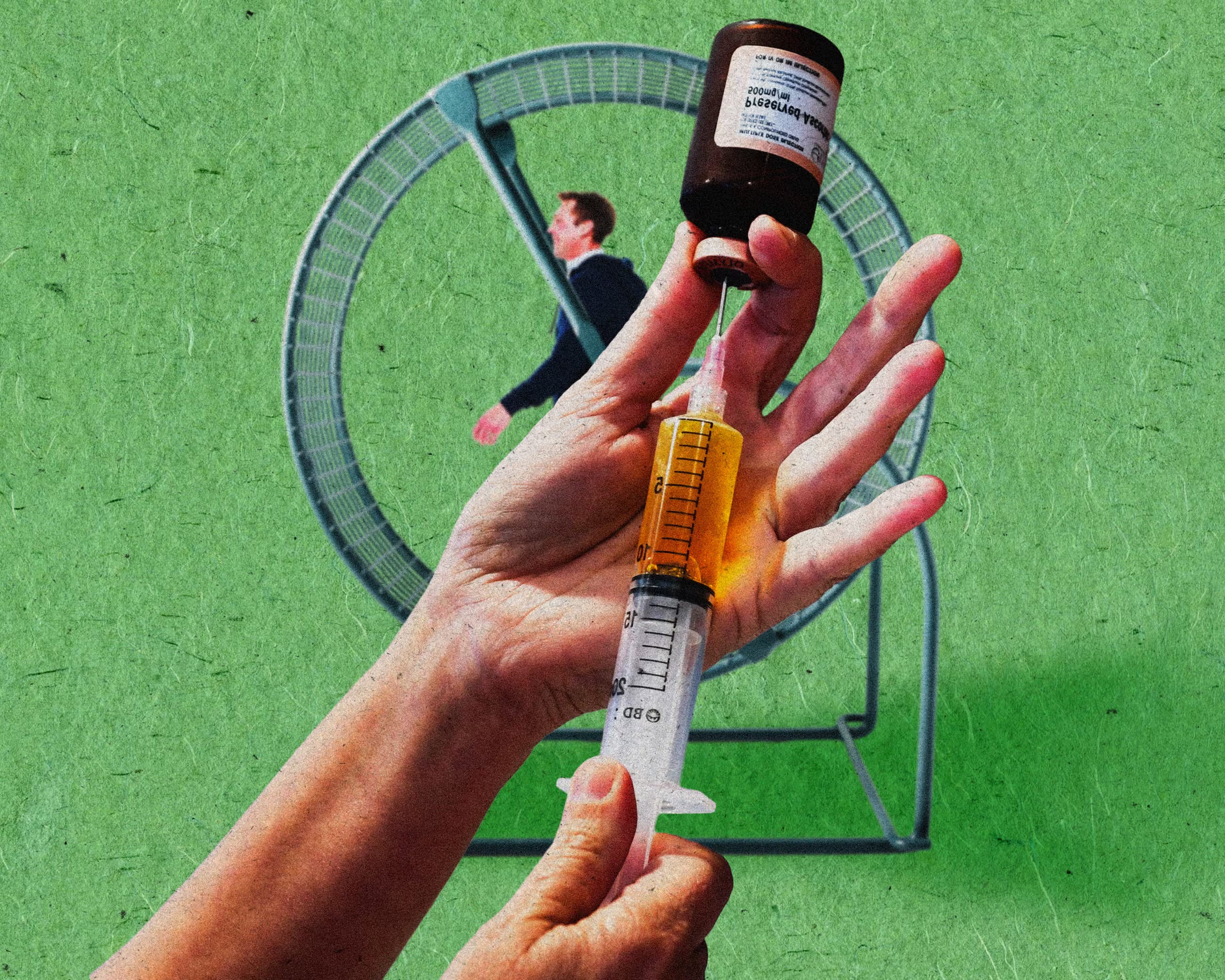
Here’s a new trend that sounds unwise: buying unregulated substances from dealers in foreign countries and injecting them into your body.
And yet, grey-market injectable peptides – a category of substances with obscure, alphanumeric names like BPC-157, GHK-Cu, or TB-500 – have developed a devoted following among biohackers and health optimizers.
Across platforms like Discord and Telegram, users are claiming these peptides help with everything from injury recovery, athletic performance, weight loss, mental function, better sleep and younger-looking skin.
Among the risk-tolerant tech workers of the Bay Area, peptides have become akin to a status symbol. The founders of the startup Superpower store vials of peptides in their office fridge for convenient, lunchtime backside injections, and at least one San Francisco “peptide rave” has seen partygoers entertained by a lab-coated man demonstrating how to inject liquid peptides.
What are injectable peptides, exactly?
Peptides are short chains of amino acids – smaller versions of proteins – that play a role in regulating hormones, releasing neurotransmitters and repairing tissue, explains Adam Taylor, director of the Clinical Anatomy Learning Centre at Lancaster University. More than 100 Food and Drug Administration-approved drugs are peptide-based, including insulin and newer GLP-1 medications like Ozempic.
Grey-market injectable peptides, on the other hand, are unapproved by the FDA. The unregulated, experimental compounds lack reliable safety data and quality control. Sometimes, these substances are essentially bootleg versions of approved drugs, like semaglutide, but are procured for a fraction of their market price from dealers online.
While some injectable peptides are entirely foreign to the human body, others, like BPC-157 and TB-500, are synthetic versions of proteins that naturally occur in us, where they play a role in tissue and cellular repair.
“Those two are popular because when you combine them, they’ve been given the exciting name ‘Wolverine stack’, based on the supposed similarities to the film character’s regenerative properties,” says Taylor.
But just because a protein has a natural role in the body doesn’t mean that a lab-made version will confer extra benefits. “Those two compounds alone have never been shown to have any benefit to justify them being used therapeutically in humans,” says Taylor.
Further Reading:

Ultra-Processed Foods: Why You Feel Worse Even When Calories Are “Fine”

Ultra-Processed Foods: Why You Feel Worse Even When Calories Are “Fine”