

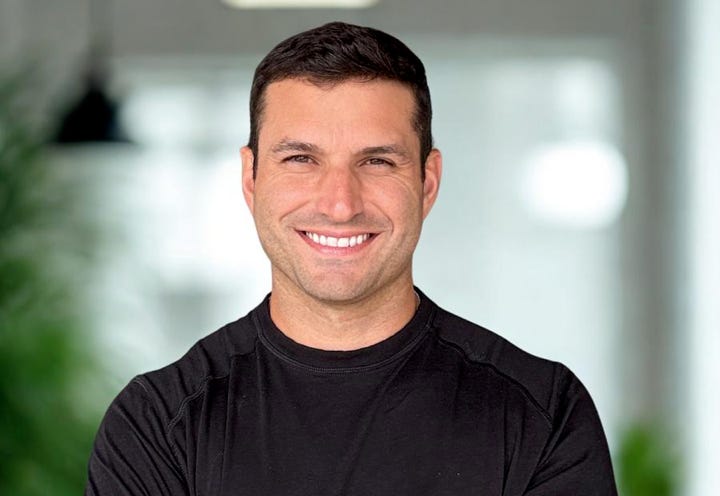
For the launch episode of my podcast, I sat down with mental performance coach Grant Chiasson for a conversation about resilience, mindset, sleep, stress, and the daily habits that shape how we feel. We covered everything from redefining mental toughness and using cognitive reframing, to cold exposure, supplements, journaling, gratitude, and why physical health plays such a powerful role in mental wellbeing.
This issue is presented by:

Magnesium helps calm the nervous system, supporting relaxation and improved sleep quality. It also aids muscle function and stress response. All forms provide the same magnesium once absorbed; BIOptimizers' formula enhances delivery by combining multiple forms with compounds like glycine and taurine, supporting absorption, tolerability, and a more effective, calming experience.
Unlock 15% off here → bioptimizers.com/jamieliveswell

Most of us were never really taught how to perform without burning out.
We were told to work harder.
To be more disciplined.
To keep going.
And for a while, it works.
Until it doesn’t.
At some point, working harder stops giving us better results and starts giving us burnout.
This week, I spoke with a mental health performance coach about what really sustains performance over time.
And it wasn’t what I thought it was going to be.
🧠 What High Performers Get Right
The highest level of performance doesn’t come from working harder.
It comes from working within your limits.
From understanding that performance isn’t just about what you produce; it’s about the system that produces it.
And what is that system?
Your nervous system.
When your nervous system is working well, you can focus, you can think clearly, and you can perform well even when it gets tough.
When your nervous system is overworked – when it has too much going on and too little rest – your performance suffers even when you work harder.
It’s not about how much you work; it’s about how much you work within your nervous system’s ability to switch between high and low.
The highest level of performance doesn’t mean you’re “on” all the time; it means you’re “on” when you need to be and “off” when you don’t – except the people who are really good at it are better at turning it on and off than anyone else.

🔑 The Shift: From Intensity to Regulation
Most people think:
Performance = pushing harder
But, really, performance is more like:
• Knowing when to push
• Knowing when to recover
• Knowing how to shift between states
It’s not about being ‘on’ all the time.
It’s about being able to turn it on when you need to, and turn it off when you don’t.
That’s what performance is all about.
🛠️ 3 Practical Shifts
Here are a few simple ideas that came out of this conversation:
Lower the baseline stress
Not everything has to be urgent.
When everything feels important, your system stays ‘on’ all the time.
That’s not sustainable.
Build in recovery time
Recovery time isn’t just time off.
It’s little moments throughout the day:
• stepping outside
• taking a few deep breaths
• pausing between tasks
Those moments are bigger than you think.
Regulate before you react
In stressful situations, most people tend to react immediately.
But, instead:
Pause.
Breathe.
Then, respond.
That little pause between those two actions is huge.

📈 Why This Matters Right Now
We’re living in a culture where:
• we’re constantly being inputted
• we have extremely high expectations
• we have virtually no time to recover
People aren’t underperforming because they’re not disciplined.
They’re underperforming because they’re overwhelmed.
And, no matter how hard you try, you cannot fix being overwhelmed.
✨ Final Thought
You don’t have to be more intense.
You have to be more regulated.
That’s what allows you to perform, not just today, but every day.
Further Reading:

🌿 The Guardrail Issue: Habits That Protect Your Energy and Mental Health

“JamieLivesWell” is presented by Seed:


